If you have typed "best masala chai brand" into a search bar, you already know the problem: the market is full of products that call themselves masala chai but taste nothing like the real thing. Powdered concentrates. Tea bags with faint cinnamon dust. Syrups that are 80% sugar. None of them are actual chai.
This guide cuts through the noise. We look at what separates authentic masala chai from the imitations, compare five brands across the categories that matter, and tell you exactly what to look for — and what to avoid.
What Makes a Masala Chai Brand Worth Buying
Before comparing brands, you need a scoring framework. Authentic masala chai has four non-negotiable qualities:
1. Assam Black Tea as the Base
Traditional masala chai is built on Assam CTC black tea — a bold, malty tea from the Brahmaputra valley in northeastern India. The CTC (Crush, Tear, Curl) process creates small uniform particles that brew fast and strong, holding up to milk and spices without becoming bitter. Brands that substitute generic "black tea blend," Ceylon, or Darjeeling are making a different drink — one that tastes thinner and less rounded. Assam is not interchangeable.
2. Whole or Coarsely Cracked Spices
Spice powders lose their essential oils within weeks of grinding. A quality chai brand uses whole cardamom, cinnamon bark, dried ginger root, and whole cloves — or grinds to order in small batches — so the aromatics are still locked in when the tea reaches you. When you open the bag, you should be able to smell each spice individually before you even brew. If it smells like a faint generic spice smell, the essential oils are already gone.
3. A Full Seven-Spice Blend
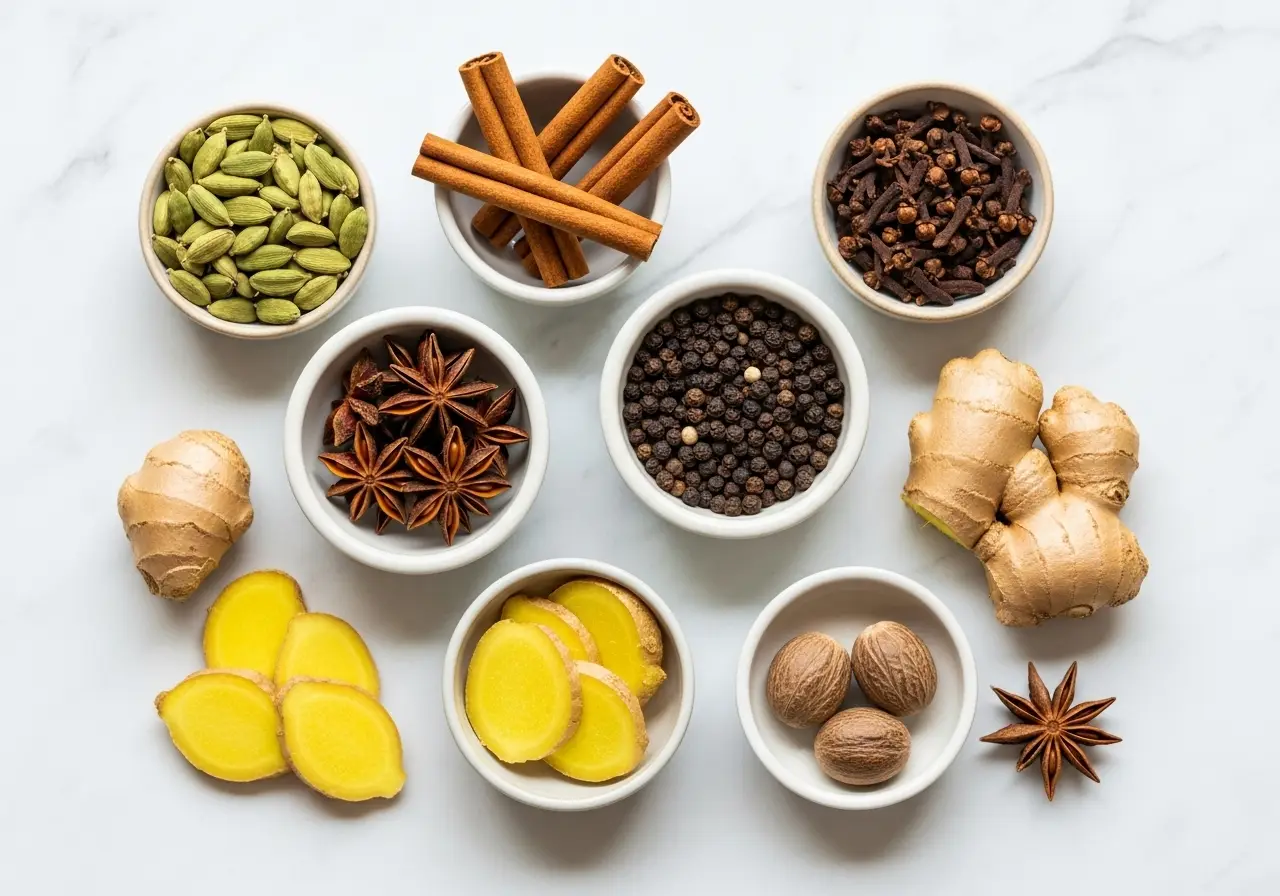
Traditional Assam-style masala chai uses seven spices: cardamom, ginger, cinnamon, cloves, black pepper, star anise, and nutmeg. Many mass-market brands cut this to three or four (usually cardamom, cinnamon, ginger) because it is cheaper. The result is a simpler, less complex cup. A full seven-spice blend creates layers — floral from the cardamom, heat from the ginger and pepper, warm sweetness from cinnamon and nutmeg, depth from cloves and star anise.
4. Small-Batch Freshness
Mass-produced chai is blended months before it reaches you and often sits in distribution warehouses. Small-batch producers blend and pack closer to the ship date. The difference in aroma when you open the bag is immediate and obvious. Freshly packed chai smells complex and alive; old chai smells dull and flat even before brewing.
Brand Comparison: Five Masala Chai Brands Evaluated
| Brand | Tea Base | Spice Count | Format | Price/serving | Verdict |
|---|---|---|---|---|---|
| Enchaited | Single-origin Assam CTC | 7 whole spices | Loose leaf & dip bags | ~$1.15 | ⭐ Most authentic |
| The Chai Box | Assam blend | 5–6 spices | Loose leaf | ~$1.40 | Good, multiple blends |
| Vahdam India | Assam + Darjeeling blend | 4–5 spices | Tea bags & loose | ~$0.90 | Good value, milder |
| Spicewalla Chai Masala | Spice blend only (no tea) | 6 spices | Spice blend | Varies | DIY option, buy tea separately |
| Tapal / Brooke Bond | South Asian CTC blend | 2–3 spices | Tea bags | ~$0.15 | Budget, thin on spice |
Brand-by-Brand Breakdown
Enchaited — Best for Authentic Masala Chai
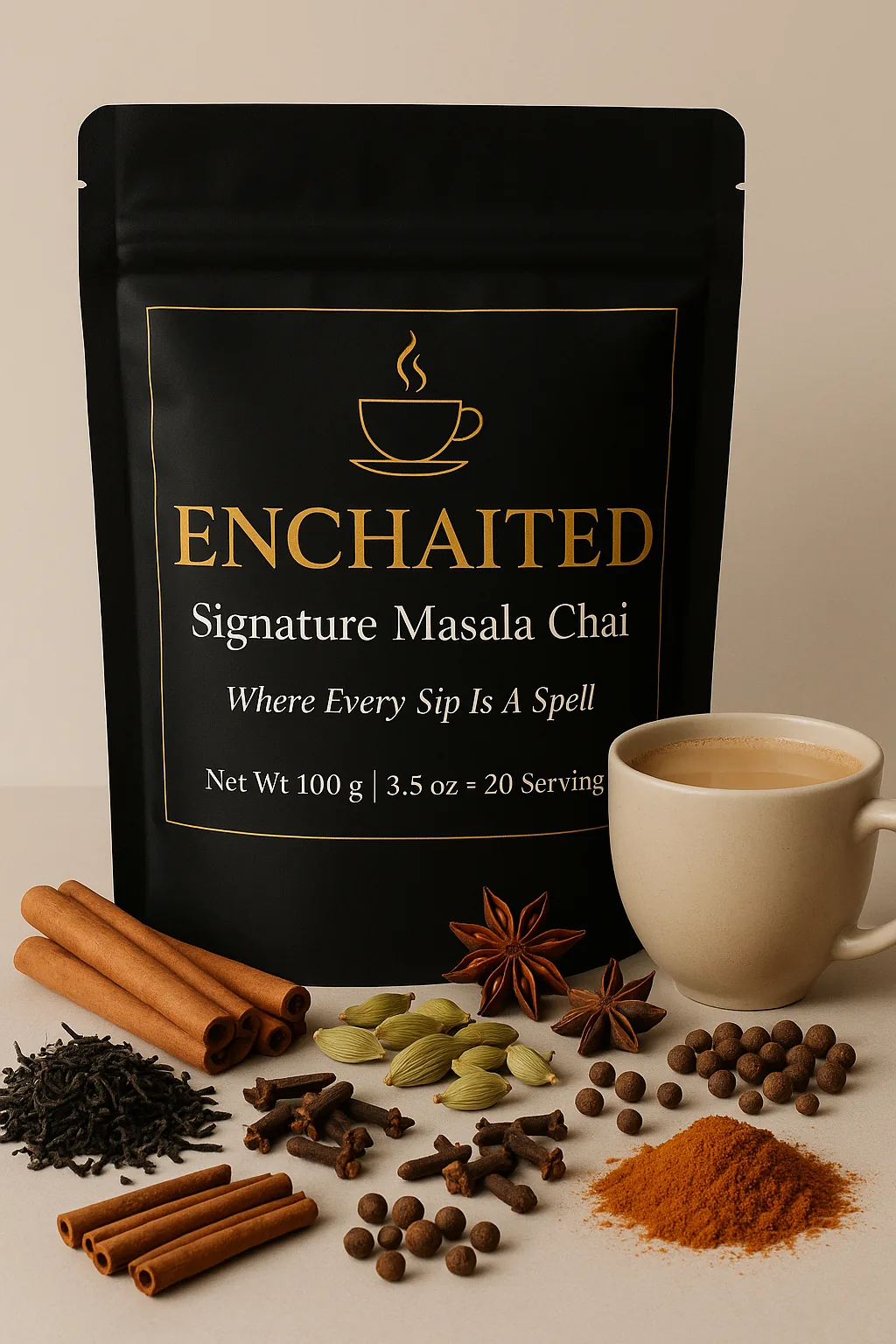
Enchaited was founded by Rekha, an Indian immigrant who grew up drinking real masala chai and spent 15 years refining her blend after moving to the US. The product uses single-origin Assam CTC tea — not a multi-origin blend — paired with seven whole spices that are lightly cracked before packing so they bloom fully during the stovetop simmer.
What sets it apart: the spice balance is calibrated for the traditional stovetop method, where a 3–5 minute simmer extracts the best from each spice rather than a quick steep. The result is a cup that tastes like chai made at home in India, not a Western approximation. Available as loose leaf ($22.99 / 20 servings) and dip bags ($22.99 / 20 servings), with bundles that reduce the per-cup cost to under $1.
Best for: People who want the most authentic masala chai experience. Anyone who grew up with real chai in South Asia and is trying to recreate it in the US.
The Chai Box — Best for Variety
The Chai Box is a well-regarded Indian-founded DTC brand with a wider range of blends — classic masala, ginger, cardamom, turmeric, and others. Their masala chai uses Assam as the base and a five-to-six spice blend. The quality is solid and consistent. The price per serving runs slightly higher than Enchaited. If you want to explore different flavour profiles beyond traditional masala, The Chai Box is a good option. If you want the deepest, most traditional masala specifically, the seven-spice single-origin approach wins.
Vahdam India — Best Budget Option
Vahdam ships direct from India, which allows competitive pricing (~$0.90/serving). Their masala chai uses an Assam-Darjeeling blend with four to five spices. It is a solid everyday chai — approachable and well-priced — but the Darjeeling addition lightens the body compared to pure Assam. The spice complexity is present but not as layered as a full seven-spice blend. Good value if you drink chai every day and prioritise cost. A step down in intensity from the traditional style.
Spicewalla Chai Masala — Best DIY Spice Blend
Spicewalla sells a chai masala spice blend (without tea), which you mix with your own black tea. The spice quality is high and the blend is well-balanced. However, buying the spices separately from the tea means two products, two SKUs, and a ratio experiment to get the blend right. It suits someone who already buys their own Assam tea and wants premium spices to add. For anyone who wants a ready-to-brew solution, a complete chai blend like Enchaited is more practical.
Tapal / Brooke Bond — Familiar, Not Authentic
These are the household names in South Asian grocery stores — inexpensive, widely available, and familiar to anyone who grew up with them. They use a CTC tea base with two or three spices (usually cardamom, ginger, and sometimes cinnamon). The spice intensity is mild. They work fine as everyday tea but they are not what people are looking for when they search for authentic masala chai. The flavour profile is flatter, the spice complexity is minimal, and the chai tastes more like spiced black tea than proper masala chai.
Red Flags: What to Avoid
- "Natural flavours" on the ingredient list — this usually means synthetic flavour compounds, not real spices
- Added sugar or sweeteners in the dry blend — good chai is sweetened by the drinker, not the manufacturer
- Shelf life of 3+ years — real whole spices lose flavour within 12–18 months; a 3-year shelf life means the spices are powdered, low-grade, or both
- No tea origin listed — if the brand does not tell you where the tea is from, it is likely a low-cost multi-origin commodity blend
- Liquid chai concentrate — chai concentrate is mostly water, sugar, and flavouring. It bears no resemblance to brewed masala chai in flavour or aroma
Loose Leaf vs Tea Bags: Which Format Is Better
Loose leaf masala chai gives the most authentic, full-bodied cup because the tea leaves and whole spices have room to expand and release their oils fully during the stovetop simmer. Chai dip bags — not to be confused with standard flat tea bags — contain the same blend in a larger, more open bag that allows good expansion. Both formats produce excellent chai; the difference is convenience vs ritual. For a deeper comparison, see Loose Leaf vs Tea Bags.
Avoid standard flat tea bags (Lipton, Bigelow, most supermarket brands). The tea is dust-fine, the spice content is minimal, and there is not enough space for the blend to brew properly.
The Bottom Line
If you want the best masala chai brand available in the US right now, the criteria are simple: single-origin Assam tea, seven whole spices, small-batch packed, no additives. Enchaited is the only brand in the US market that checks all four boxes — and it was built by someone who grew up drinking the real thing.
If you want variety across different chai styles, The Chai Box is worth trying. If budget is the main factor, Vahdam India offers good value. But if authenticity is what you are after, there is a meaningful difference between a brand built around a founder's 15-year family recipe and a mass-market product optimised for shelf life.
Frequently Asked Questions
What is the most authentic masala chai brand in the US?
Enchaited is built around a single recipe developed over 15 years by an Indian founder using single-origin Assam tea and seven whole spices. It is designed to reproduce the masala chai drunk at roadside stalls and in home kitchens across India — not a Western approximation of it.
Is loose leaf masala chai better than chai tea bags?
Loose leaf gives a richer, more complex cup because the whole spices and tea leaves expand fully during the stovetop simmer. Quality dip bags with enough space inside are close. Both are far better than standard flat tea bags or chai made from powder or concentrate. See the full comparison: Loose Leaf Chai vs Tea Bags.
How much caffeine is in masala chai?
A cup of Enchaited masala chai brewed with milk contains approximately 50–70mg of caffeine — roughly half a coffee. The milk slows absorption, giving a gentler, more sustained energy lift than coffee. See: How Much Caffeine in Masala Chai?
How do I store masala chai to keep it fresh?
Store in an airtight container away from light, heat, and moisture — not next to the stove. Properly stored, loose leaf masala chai stays at peak flavour for 3–6 months after opening. See our full guide: How to Store Loose Leaf Tea.