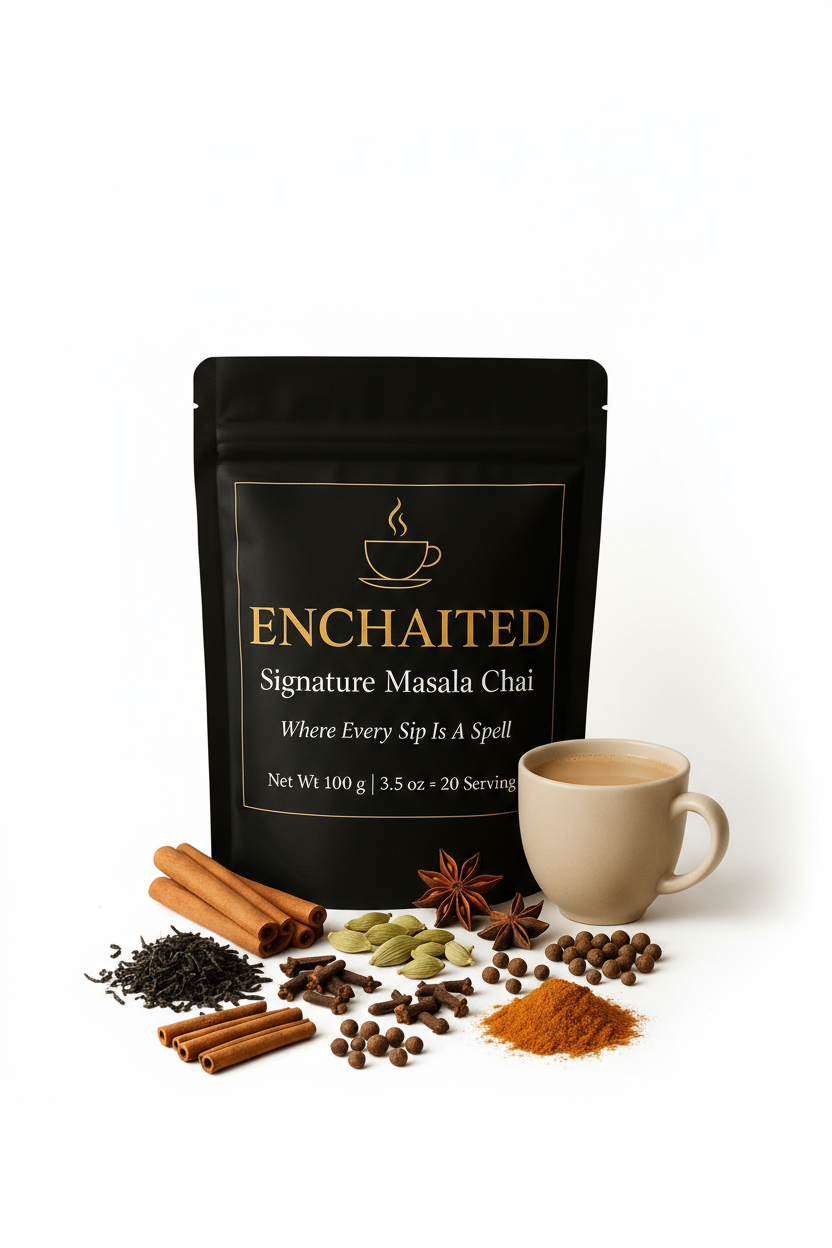
Type "best masala chai" into any search bar and you will get lists of chai lattes, chai concentrates, and spiced teabags that have never been within a thousand miles of authentic masala chai. The word "chai" has been so thoroughly commercialised in the West that it now means almost anything — a pumpkin spice latte, a vanilla syrup, a cardamom-dusted flat white.
This guide is for people who want the real thing: the masala chai that is brewed stovetop in kitchens across India every morning, that smells like cardamom and ginger before you even put it to your lips, that has a depth of spice no coffeehouse version can approach. Here is what the best masala chai actually is, what it contains, how to brew it, and where to find it in the US.
What "Best Masala Chai" Actually Means
Masala chai — literally "spiced tea" in Hindi — is not a single recipe. Every region of India has its own version, every household has its own ratio. But authentic masala chai shares four non-negotiable characteristics regardless of where it was made:
- A bold black tea base — specifically Assam CTC black tea, strong enough to hold up to milk and a full spice blend without becoming washed out
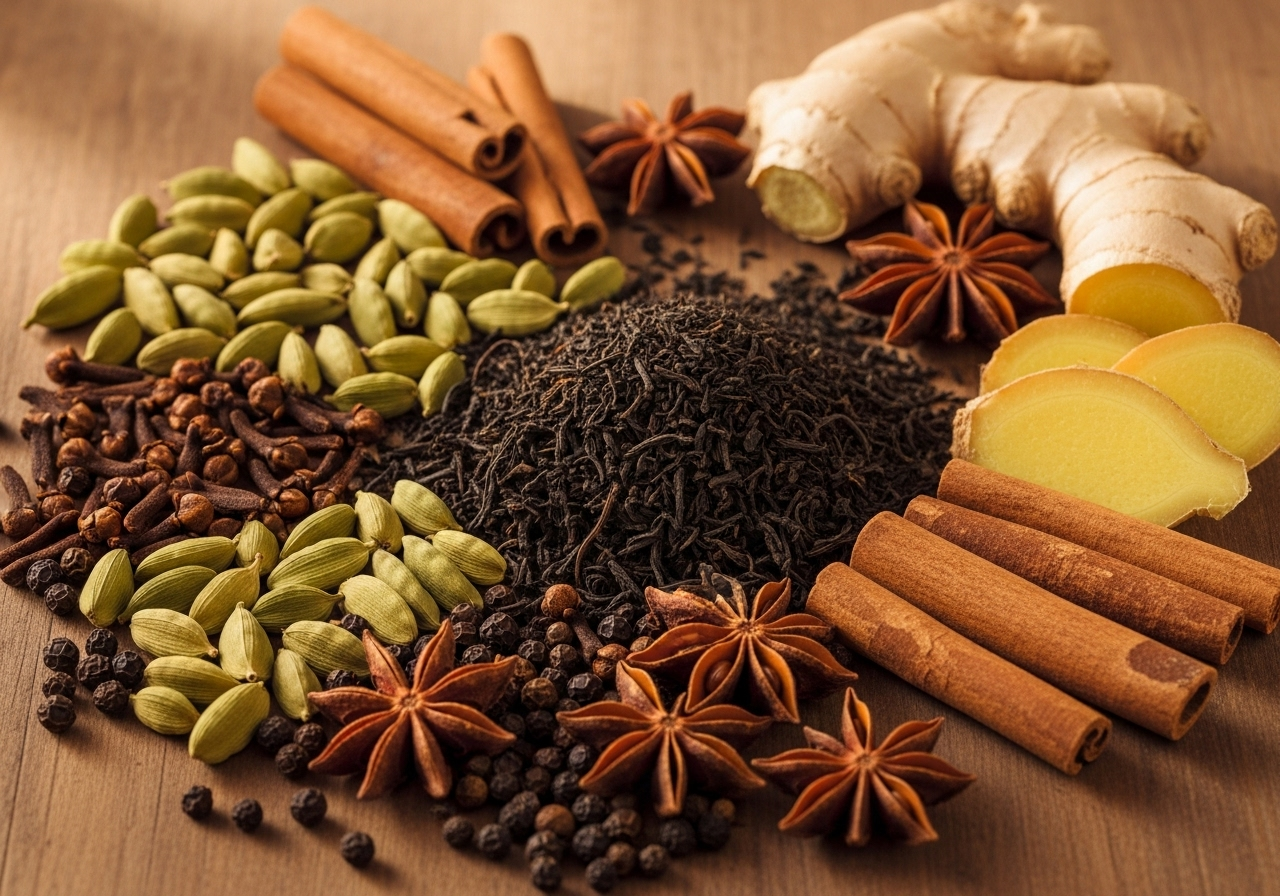
- Real whole spices — not powder, not extract, not "natural flavour" — actual cardamom pods, cinnamon bark, dried ginger root, and whole cloves that bloom when simmered
- Brewed with milk — not steeped in water and splashed with milk after. The tea and spices simmer together with milk and water so the fat in the milk carries the spice oils and creates a round, creamy body
- Sweetened by the drinker — good masala chai is not sweet out of the bag. The drinker adds sugar, jaggery, or honey to their own taste
Any product that deviates significantly from these four things is not the best masala chai. It is something else with the word "chai" on the label.
The Seven Spices That Define the Best Cup
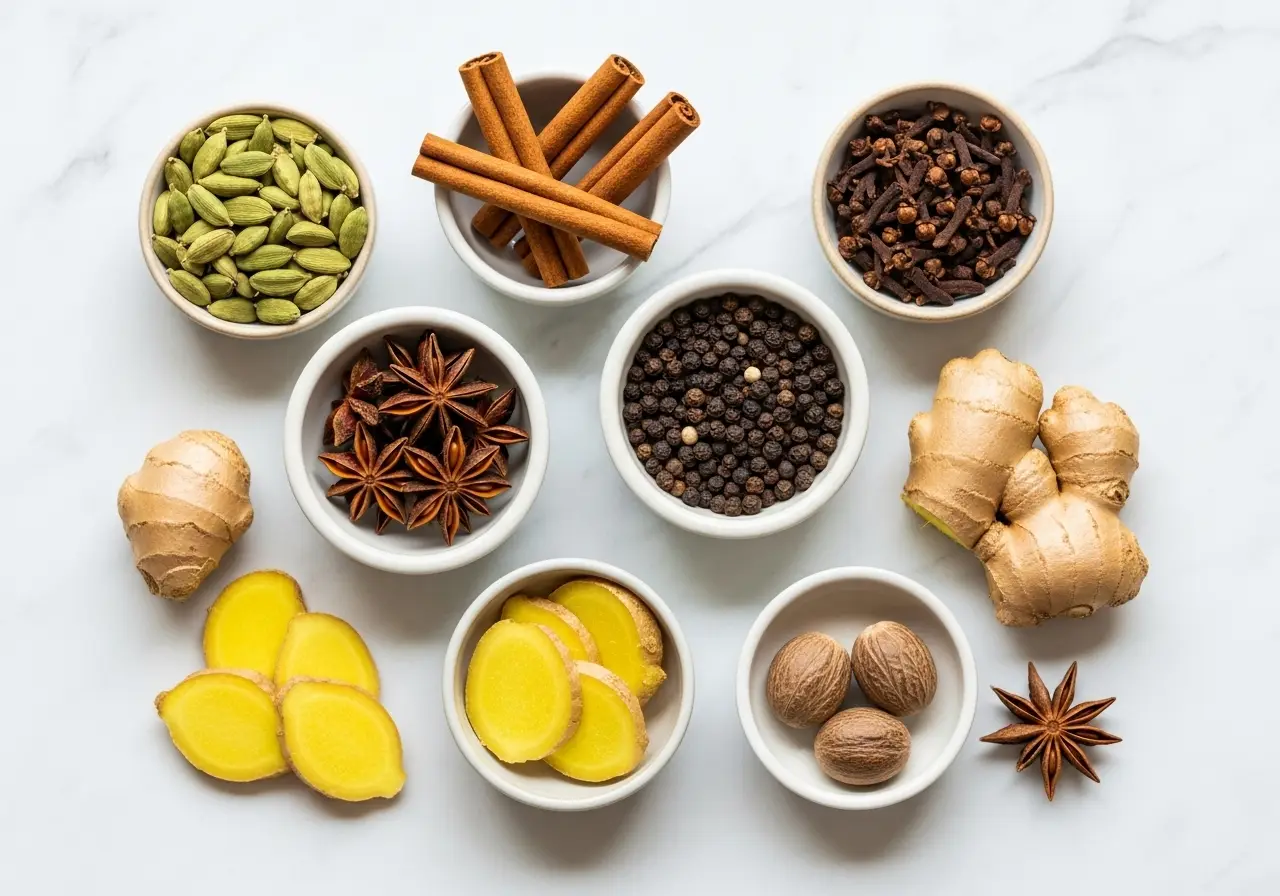
Traditional Assam-style masala chai uses seven spices. Each one plays a specific role in the final cup. Understanding what each spice contributes helps you recognise when something is missing.
Cardamom — The Floral Top Note
Cardamom is the most recognisable spice in masala chai. Its bright, floral, slightly citrusy aroma is what hits you when you open a quality bag. In the cup it provides the high note that lifts the whole blend. Most low-quality chai contains a trace of cardamom powder. Authentic chai uses whole or cracked green cardamom pods, which retain their essential oils until brewing.
Ginger — The Heat and Warmth
Dried ginger root provides a slow, warming heat that builds through the cup rather than hitting immediately. It is also the spice most associated with masala chai's digestive benefits. Fresh ginger has a sharper, more volatile heat — in dried form it mellows into something deeper and more sustained.
Cinnamon — The Sweet Backbone
Cinnamon bark (not cassia, which is sharper) provides a warm sweetness that ties the blend together. It rounds out the heat from ginger and pepper and gives the cup a sense of completeness. Without cinnamon, masala chai tastes spiky rather than harmonious.
Cloves — The Depth
Cloves are the most intense spice in the blend — used sparingly but essential. They add a dark, almost medicinal depth that prevents the cup from tasting one-dimensional. Too many cloves and the cup becomes harsh; the right amount anchors the blend.
Black Pepper — The Bite
Black pepper is what gives authentic masala chai its characteristic kick at the back of the throat. Many Western chai products omit it because it makes the cup harder to sell to people who expect a sweet, mild drink. Real masala chai has pepper. It activates the other spices and stimulates circulation — one of the reasons chai is considered a warming, energising drink.
Star Anise — The Complexity
Star anise contributes a subtle liquorice-like note that adds complexity without being identifiable on its own. Most people who taste masala chai with and without star anise can tell something is missing in the latter version without knowing exactly what it is. It is the quiet spice — felt more than noticed.
Nutmeg — The Finish
Nutmeg provides a warm, slightly sweet finish that lingers after the cup. It is delicate — a little goes a long way — and it is often the spice that makes the difference between a good masala chai and a memorable one.
The best masala chai includes all seven. Most mass-market brands cut this to three or four to reduce cost and simplify the flavour profile for wider appeal. The result is a cup that is recognisably chai but lacks the depth and layering of the authentic version.
Why the Tea Base Matters as Much as the Spices
Chai without the right tea base is spiced water. Assam CTC black tea — grown in the Brahmaputra valley of northeastern India — is the standard for authentic masala chai for a specific reason: it is bold enough to hold up to milk and a full seven-spice blend.
CTC stands for Crush, Tear, Curl — a processing method that creates small, uniform pellets that brew fast and strong. Assam CTC is malty, full-bodied, and slightly brisk, with a flavour that does not get lost under milk. When you simmer it with the spices, it extracts cleanly and creates the deep mahogany colour that is visual shorthand for a well-made cup.
Brands that substitute generic "black tea blend," Ceylon, or Darjeeling are making a different drink. Ceylon is lighter and more floral — it brews a thinner cup under milk. Darjeeling is delicate and aromatic — it is not designed to be simmered hard with spices. Neither produces masala chai that tastes like it was made in India.
Single-origin Assam — meaning from one tea estate or region rather than a blend of multiple origins — goes one step further. The flavour profile is consistent and traceable, and the quality floor is higher than commodity multi-origin blends.
How to Brew the Best Masala Chai
The stovetop method is the only way to brew masala chai that extracts the full depth of the spices. A quick steep in hot water produces a weaker, flatter cup. Here is the standard method:
- Combine water and milk — use a 1:1 ratio of water to whole milk in a small saucepan. For a single cup, roughly 120ml of each.
- Add the chai — one heaped teaspoon of loose leaf masala chai (or one dip bag) per cup.
- Bring to a simmer — medium heat. Do not boil hard — a gentle simmer extracts without making the milk scorch.
- Simmer 3–5 minutes — this is where the spices bloom. The liquid will deepen in colour and the kitchen will fill with cardamom and ginger. Do not rush this step.
- Strain and sweeten — pour through a fine mesh strainer. Add sugar, jaggery, or honey to your taste. Drink immediately.
For a full step-by-step with variations (iced chai, oat milk chai, microwave method), see the complete masala chai brewing guide.
Loose Leaf or Dip Bags: Which Makes the Best Masala Chai?
Loose leaf masala chai gives the most authentic cup. The tea leaves and whole spices have room to move freely in the saucepan, which means maximum surface area contact with the hot liquid and full flavour extraction. There is also a ritual element to measuring loose leaf that most daily chai drinkers appreciate.
Masala chai dip bags — the large, open-mesh bags designed for stovetop brewing, not the flat paper tea bags you get at supermarkets — are a close second. The same blend in a convenient format that is easier for travel, offices, and anyone who wants to skip the straining step. The difference in the cup is noticeable but minor; the difference in convenience is significant.
Standard flat tea bags (Lipton, Bigelow, most supermarket brands) produce a genuinely inferior cup — the chai blend is too compressed, the spice content is minimal, and there is not enough space for anything to expand and brew properly. For the best masala chai, use either loose leaf or quality dip bags.
See the full comparison: Loose Leaf Chai vs Tea Bags — Which Brews Better?
Where to Find the Best Masala Chai in the US
Most Indian grocery stores carry everyday CTC teas — good for daily drinking but not the seven-spice, single-origin experience described above. Specialty tea shops sometimes carry masala chai but rarely use Assam CTC specifically. The best source for authentic masala chai in the US is direct from a small-batch producer who built their blend around the authentic standard.
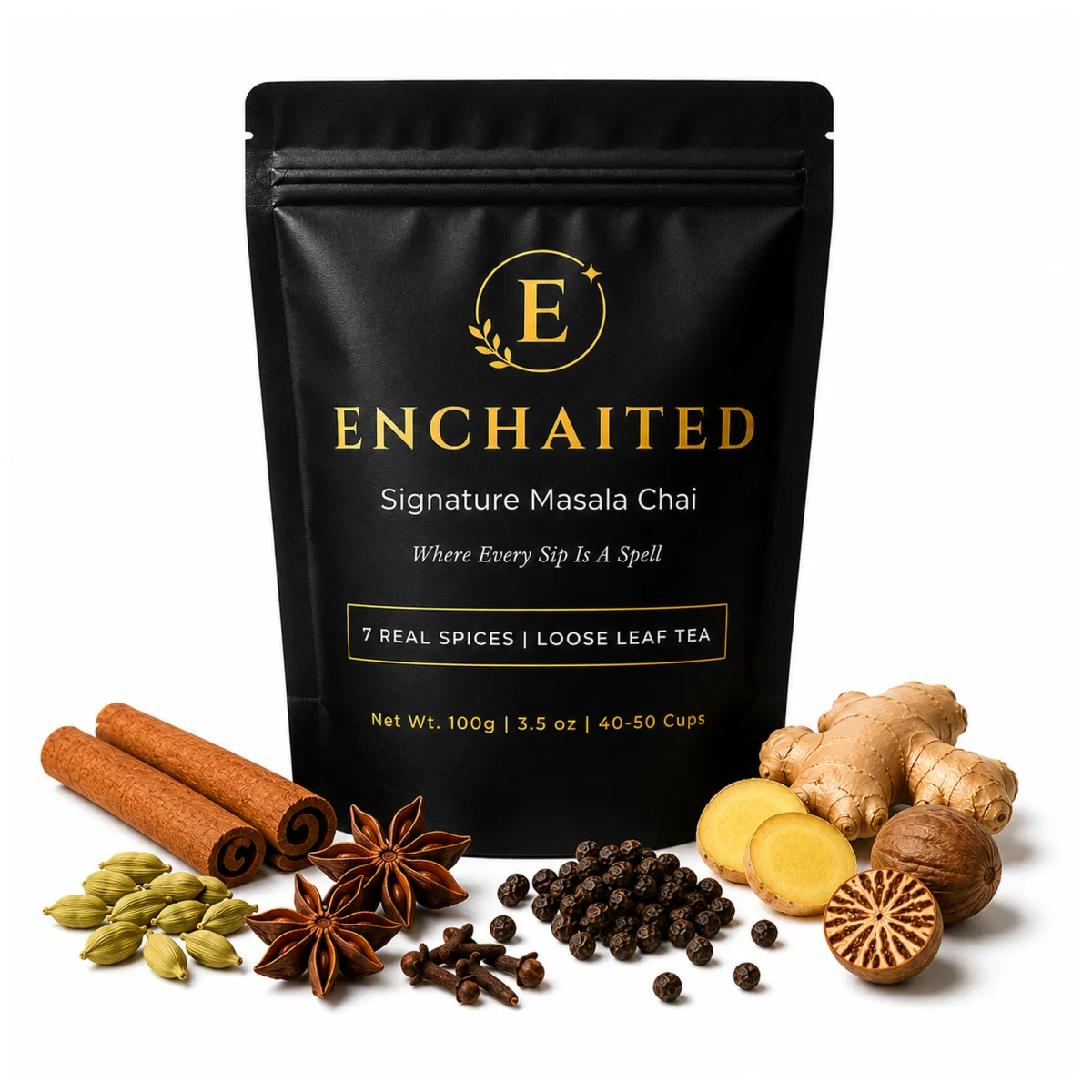
Enchaited's loose leaf masala chai is built around a single founder's recipe — 15 years in development by Rekha, an Indian immigrant who grew up drinking real masala chai and spent years refining the ratio of Assam CTC to seven whole spices to reproduce what she drank every morning as a child. It ships within 24 hours, arrives fresh, and produces a cup that is immediately recognisable to anyone who grew up with real chai in South Asia.
For a detailed comparison of brands available in the US, see: Best Masala Chai Brand: An Honest Comparison.
Five Things That Ruin a Cup of Masala Chai
- Using boiling water only — no milk means no creaminess and the spice oils have nothing to bind to
- Steeping for 30 seconds — masala chai needs 3–5 minutes at a simmer to develop properly
- Using spice powder instead of whole spices — powder loses its essential oils within weeks; the aromatics are already gone before you brew
- Adding milk after — the milk needs to simmer with the tea and spices, not be added cold at the end
- Using chai concentrate — concentrate is mostly water, sugar, and natural flavouring; it produces a sweet, one-dimensional drink with none of the depth of real chai
Frequently Asked Questions
What is the best masala chai to buy in the US?
The best masala chai in the US uses single-origin Assam CTC black tea and a full seven-spice blend (cardamom, ginger, cinnamon, cloves, black pepper, star anise, nutmeg) with no added powder or artificial flavour. Enchaited is the only US brand built around this exact standard, developed by an Indian founder over 15 years. See the full brand comparison for alternatives.
What spices are in authentic masala chai?
Traditional masala chai contains seven spices: cardamom, ginger, cinnamon, cloves, black pepper, star anise, and nutmeg. Each plays a specific role — cardamom for the floral top note, ginger and pepper for warmth and heat, cinnamon for the sweet backbone, cloves for depth, star anise for complexity, and nutmeg for the finish. Many commercial blends reduce this to three or four spices to cut costs.
What tea is used in the best masala chai?
Authentic masala chai uses Assam CTC black tea — specifically from the Brahmaputra valley in northeastern India. The CTC (Crush, Tear, Curl) process creates pellets that brew strong and bold, holding up to milk and a full spice blend. Single-origin Assam produces a more consistent, higher-quality cup than multi-origin commodity blends.
Is masala chai better with loose leaf or tea bags?
Loose leaf masala chai brews the best cup because the whole spices and tea leaves expand fully during the stovetop simmer. Quality dip bags with enough space inside (not flat paper tea bags) are a close second and more convenient. Standard supermarket tea bags produce an inferior result. See: Loose Leaf vs Tea Bags.
How do you make the best masala chai at home?
Simmer equal parts water and whole milk in a saucepan. Add one teaspoon of loose leaf masala chai per cup. Simmer gently for 3–5 minutes until the liquid deepens in colour and the kitchen smells of cardamom and ginger. Strain, sweeten to taste, and drink immediately. The full method with variations is in our masala chai brewing guide.
How much caffeine is in masala chai?
A cup of masala chai brewed with Assam tea contains approximately 50–70mg of caffeine — about half a coffee. Brewed with milk, the absorption is slower and the energy lift is more sustained without the crash. See: How Much Caffeine in Masala Chai?
What is the difference between masala chai and chai tea?
"Chai tea" is a Western term that is technically redundant — "chai" already means tea in Hindi. When people say "chai tea" they usually mean a spiced black tea, but the term is used loosely to describe everything from an authentic stovetop masala chai to a vanilla-syrup latte. "Masala chai" specifically means tea brewed with a blend of warming spices (masala), which is the authentic Indian version.